

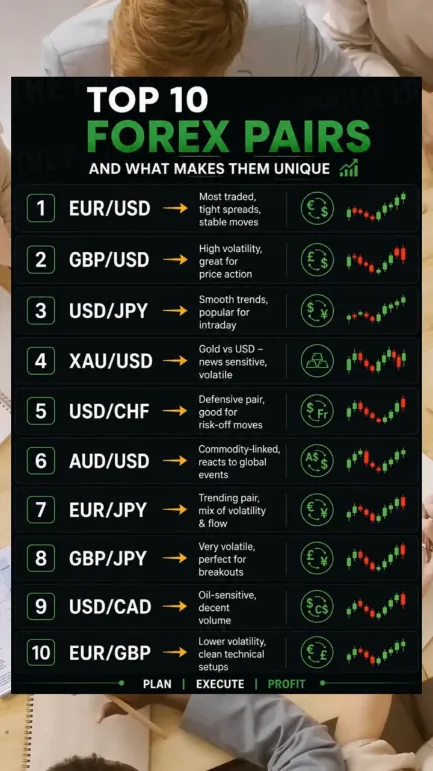
For beginners comparing a trusted forex trading platform, understanding the mechanics of a currency trade matters more than focusing only on charts or market predictions. Forex prices reflect the relationship between two currencies, and every position is affected by factors such as pair structure, pip movement and the spread between buying and selling prices. Learning these basics first can make platform information easier to interpret and help traders assess potential costs and risk more confidently before considering how a particular market direction may develop.
Understanding Currency Pairs
A forex quote always contains two currencies, known as the base currency and the quote currency. In EUR/USD, for example, the euro is the base currency and the US dollar is the quote currency. The displayed price shows how much of the quote currency is needed for one unit of the base currency. If the price rises, the base currency has strengthened relative to the quote currency; if it falls, the opposite relationship has occurred during that period in the market at that time.
Measuring Movement With Pips
Anyone learning how forex trading works should become comfortable with pips because they provide a standard way to describe relatively small price changes. For many major currency pairs, one pip is commonly represented by the fourth decimal place, although pairs involving the Japanese yen are typically quoted differently. Pip value also depends on factors such as position size and the currencies involved. Understanding this relationship helps traders translate a chart movement into a more practical measure of potential gain or loss on a position.
Why Spreads Matter
The spread is the difference between the bid price and the ask price displayed for a currency pair. In simple terms, one price is associated with selling and the other with buying. That gap forms part of the trading cost and can vary depending on liquidity, volatility, the instrument and prevailing market conditions. Major currency pairs often behave differently from less actively traded pairs. Traders should therefore look at the live spread before entering rather than assuming that one advertised figure applies in every situation.
Position Size and Exposure
Position size determines how strongly a movement in pips affects the trading account. A small position and a large position can experience the same market move while producing very different monetary outcomes. This is why traders should calculate exposure before placing an order instead of choosing size based on confidence alone. Margin and leverage also influence overall exposure. Leverage can magnify both gains and losses, so understanding pip value without understanding position size gives only a partial picture of the risk involved in each trade.
Market Conditions Can Change
Currency pairs can behave differently across trading sessions because liquidity and market participation change throughout the day. Economic announcements, central-bank decisions and unexpected news can also increase volatility and cause prices to move more quickly. During these periods, spreads may change, and execution may not behave exactly as it does in quieter conditions. Beginners can benefit from observing the same pair at different times, noting how price movement, spread behaviour and volatility affect the practical experience of entering and managing a position over time.
Connecting the Concepts in Practice
A demo environment can help traders connect these concepts without immediately risking personal capital. Rather than opening random positions, users can record the pair selected, the spread at entry, the number of pips moved and how position size affected the simulated result. Repeating this process across several sessions makes the mechanics easier to understand. Demo performance still has limitations, because live trading introduces real financial pressure and execution conditions that may differ from simulation, so practice should be treated as education rather than proof alone.
Conclusion
Understanding currency pairs, pips and spreads gives traders a clearer foundation for interpreting forex prices and evaluating potential exposure. These concepts work together: the pair defines what is being compared, pips measure price movement, and the spread contributes to trading cost. Traders researching btcdana.com can use its available educational and platform resources as part of a broader learning process. Forex and CFD trading involve financial risk, so basic mechanics should be understood alongside position sizing, leverage and disciplined risk management before capital is considered.