

Artificial intelligence has moved from experimental tool to core infrastructure in digital marketing. By 2026, nearly every marketing professional incorporates generative or agentic AI into daily work, with adoption rates exceeding 90 percent across teams and major brands. Organizations report meaningful efficiency gains, faster content production, and new capabilities in personalization and automation. The shift is reshaping how online businesses attract customers, create experiences, and measure results.
Widespread Adoption and the Rise of Agentic AI
Marketing teams now treat AI as standard rather than optional. The majority of professionals use it daily for tasks ranging from content drafting to analytics. A growing share of organizations deploy AI agents that handle multi-step processes autonomously. These agents commonly manage reporting and analytics, draft campaign briefs, generate content, and support media planning.
Nearly half of marketing organizations have replaced certain human tasks with AI solutions in the past year. This evolution frees teams from repetitive work and allows focus on strategy, creativity, and customer relationships. Productivity improvements are widely reported, with many marketers noting moderate to significant efficiency gains that continue to compound.
Generative Engine Optimization and the Changing Nature of Discovery
Traditional search engine optimization remains important, yet discovery patterns are evolving rapidly. Consumers increasingly turn to AI-powered platforms and assistants for product research and recommendations. Traffic arriving through AI sources often shows higher engagement and conversion rates compared with conventional channels.
In response, marketers are adopting Generative Engine Optimization practices. This involves creating clear, structured, machine-readable content that AI systems can accurately interpret and surface. Brands focus on becoming visible and correctly represented within AI-generated answers and summaries. Structured data, authoritative content, and consistent brand messaging help ensure favorable treatment by these systems.
Hyper-Personalization at Scale
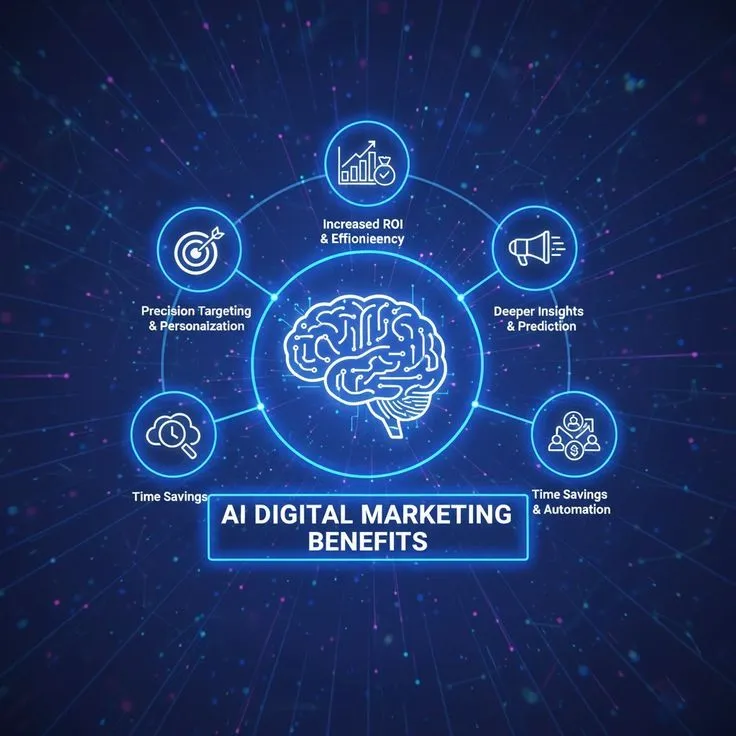
AI-driven personalization has advanced beyond basic product recommendations. Systems now analyze first-party data, behavioral signals, and real-time context to deliver tailored experiences across channels. Effective personalization can improve customer satisfaction, lift revenue, and lower serving costs.
Successful implementations rely on strong data foundations. Organizations with well-structured first-party data gain clearer insights and more accurate predictions. Predictive analytics forecast churn, purchase likelihood, and optimal timing for outreach. Dynamic content adjusts websites, emails, and ads to individual preferences, creating more relevant journeys without manual intervention for every interaction.
Content Creation, Creative Optimization, and Always-On Campaigns
Generative AI accelerates content production dramatically. Teams generate drafts for blogs, social posts, emails, and ad variations far faster than traditional methods. Human oversight remains essential for brand voice, accuracy, and cultural nuance. Leading approaches combine AI speed with human judgment to maintain quality and authenticity.
Creative optimization has also matured. AI tests multiple variants, identifies high-performing elements, and iterates in near real time. Campaigns shift from fixed calendars toward continuous, always-on orchestration. Marketing systems monitor performance, reallocate budgets, and adjust messaging dynamically. This model supports fluid customer journeys rather than rigid campaign cycles.
Agentic systems further enable this by handling routine execution while escalating strategic decisions to people. The result is faster activation, reduced external spend in some cases, and the ability to respond to market changes within minutes rather than weeks.
Predictive Analytics, Measurement, and Data Foundations
AI enhances forecasting and decision-making through pattern recognition across large datasets. Predictive models inform budget allocation, audience targeting, and inventory or promotion planning. Marketing mix modeling has become more agile and forward-looking, supporting better ROI predictions.
Measurement remains a critical gap for many organizations. While efficiency gains are clear, rigorously tracking AI’s contribution to business outcomes is less common. Teams that define clear metrics and benchmarks from the outset extract greater value. Investment in data quality, integration, and governance proves essential as autonomous systems depend heavily on the information they process.
Organizational Adaptation and Human-AI Collaboration
High-performing teams redesign workflows rather than simply bolting AI onto existing processes. They invest in skills development, establish governance frameworks, and create hybrid roles where people direct AI systems. Concerns around brand safety, misinformation, authenticity, and ethical use have sharpened, prompting stronger controls and human oversight.
Authenticity matters more as AI-generated creative proliferates. Consumers and platforms scrutinize synthetic content, making verified creator partnerships and transparent practices increasingly valuable. Organizations that balance automation with genuine human connection and cultural insight maintain stronger brand trust.
Practical Strategies for Online Businesses
Online businesses can capture value by focusing on several interconnected areas. Strengthen first-party data collection and structure to fuel accurate personalization and prediction. Optimize content for both traditional search and AI discovery systems. Deploy AI agents for high-volume execution tasks while reserving human capacity for strategy and relationship building. Implement continuous testing and orchestration instead of episodic campaigns. Finally, establish clear measurement frameworks to evaluate AI investments against revenue, efficiency, and customer outcomes.
The transition rewards those who treat AI as a capability that reshapes operations rather than a collection of isolated tools. Companies reporting the strongest results redesign processes around continuous insight, scaled creativity, hyper-personalization, and real-time orchestration.
Looking Forward
In 2026, AI-powered digital marketing is no longer emerging—it is operational reality. Adoption is near universal, agentic systems are expanding, and discovery channels are shifting. Online businesses that integrate these capabilities thoughtfully gain speed, relevance, and competitive advantage. Those that lag risk declining visibility and efficiency in an environment where customers and algorithms alike expect personalized, timely, and accurate interactions.
Success depends on more than technology. It requires solid data foundations, skilled teams that collaborate effectively with AI, rigorous measurement, and a commitment to authentic brand experiences. Organizations that master this combination position themselves to grow efficiently and sustainably in the evolving digital landscape.
Read more – gloryhouseworld.com