

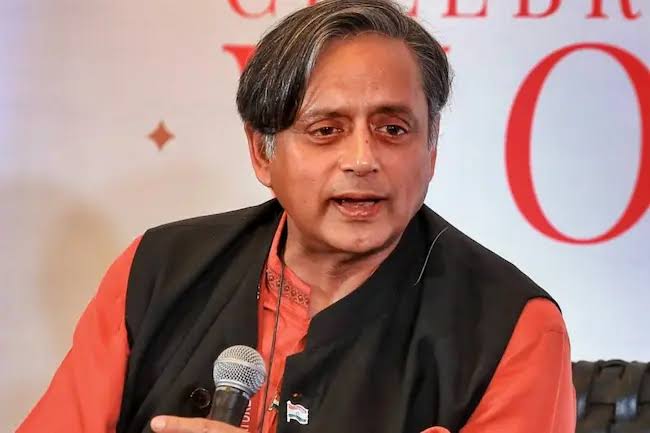
Congress MP Shashi Tharoor has offered a measured assessment of Aditya Dhar’s Dhurandhar films after watching both instalments. While acknowledging the presence of propaganda elements, he described the franchise as a major cinematic experience and praised its storytelling, plot twists and technical execution. His comments, shared through a video on his official channel, add a prominent political voice to the polarised discussion that has surrounded the Ranveer Singh-led projects since their release.
The first film arrived in December 2025 and the second in March 2026. Together they emerged as one of the biggest commercial successes of recent Indian cinema, yet both drew sharply divided responses. Supporters celebrated the scale, action and narrative ambition. Critics pointed to the depiction of Pakistan, the level of violence and what they viewed as an overtly nationalistic framing.
Acknowledging Propaganda While Appreciating Craft
Tharoor made clear that he recognised propaganda woven into the films. He noted that the movies had been banned in several countries, including Pakistan and multiple Gulf nations, on the grounds that they could heighten tensions between Indians and Pakistanis. He said he could understand those concerns.
At the same time, he distinguished between the political messaging and the films’ qualities as entertainment. He found the second part particularly strong as a work of fiction. The storyline and plot twists, he said, were brilliant. Overall, he characterised the eight-hour combined runtime as a vivid and impactful cinematic experience, citing competent acting, strong production design and assured direction.
Concerns Over Violence and Realism
Tharoor was critical of the graphic violence. He described the blood, mayhem and cruelty as excessive and among the most extreme sequences he had encountered in Indian cinema. In his view, the level of brutality was unnecessary for the story being told.
He also commented on the portrayal of intelligence operations. Drawing on his own experience of interactions with intelligence officials, which he characterised as civilised exchanges of analysis and information, he said the cloak-and-dagger elements and dramatic commands leading to distant explosions did not match the world he had known. He further noted that the character played by R. Madhavan, loosely inspired by a long-serving national security figure, stretched credibility by remaining in the same role across decades, something that does not typically occur in bureaucratic systems. He accepted, however, that fiction often consolidates such figures for narrative convenience.
Reflections on Audience Reaction Across the Border
Tharoor expressed curiosity about how Pakistani viewers might respond if they watched the films. Some lines, he suggested, might provoke laughter. Other elements could prompt reflection on actions carried out in their country’s name. His remarks framed the movies as products that carry political weight beyond pure entertainment, particularly in the sensitive context of India-Pakistan relations.
The films follow an undercover Indian operative navigating the underworld and intelligence networks in Pakistan, blending fictional narrative with references to real historical events and figures. This approach has fuelled much of the debate about where storytelling ends and messaging begins.
Commercial Success Amid Polarisation
Commercially, the franchise performed strongly, with combined worldwide earnings reported in excess of Rs 3,100 crore. The cast includes Ranveer Singh in the lead, supported by Akshaye Khanna, Arjun Rampal, Sanjay Dutt, R. Madhavan and others. The scale of the production, the intensity of the action sequences and the high-stakes plot contributed to its box-office run even as critical and public opinion remained divided.
Tharoor’s intervention stands out because it neither fully embraces nor completely dismisses the films. He separates the pleasure of well-crafted cinema from discomfort with certain narrative choices and the intensity of the violence. In doing so, he mirrors a broader conversation taking place among audiences who have found the movies both gripping and troubling.
Broader Context of Political Cinema
The Dhurandhar films arrive at a time when Indian mainstream cinema has increasingly engaged with themes of national security, cross-border conflict and intelligence operations. Such subjects inevitably invite scrutiny over accuracy, tone and intent. Tharoor’s comments highlight the tension between artistic ambition and political interpretation that frequently accompanies these projects.
By describing the films as a major cinematic experience while openly noting the propaganda elements and excessive violence, the Congress MP has articulated a nuanced position. His remarks underscore that commercial success and technical achievement can coexist with legitimate questions about representation, restraint and the messages embedded in popular storytelling.
As the conversation around the franchise continues, Tharoor’s assessment adds a thoughtful perspective from outside the film industry, one that engages with both the craft and the content without reducing the discussion to simple approval or rejection.
Read more – wishdua.com